
TRAIN HORN FOR TRUCK.
Complete Guide · Best Picks 2026
The independent expert source on train horns for trucks since 2026 — DJD Labs verified dB tests, 20+ brands tracked, 50-state legality covered.
Picking the best train horn for truck install — pickup, HD, or Class 8 — comes down to one question we filter every pick through: does it work on a truck? Independent train horn for truck picks, install math, and tank-sizing calculators for the people who actually put one on the road.
WHAT IS A TRAIN HORN
FOR TRUCK?
A short, sourced answer before we go deep on what a real train horn for truck install actually looks like. Skip ahead if you already know the basics.
A train horn for truck is a multi-trumpet, locomotive-style warning horn installed on a personal or commercial truck. The defining feature is the chord — three to five separate trumpets, each tuned to a specific note, playing simultaneously to produce the deep, dissonant sound that you hear from a freight locomotive. A single-trumpet 130 dB air horn is loud, but it does not sound like a train. The chord weight is what makes a real train horn for truck install distinct from a generic loud horn.
Output sits in the 130–175 dB range, measured at 10 feet under SAE J1470 conditions (A-weighted, slow response). For reference, a stock factory horn on a 2024 Ford F-150 measures around 110 dB, a stock Class 8 semi air horn around 125 dB, and a real Nathan K5LA on a moving locomotive about 175 dB at the source. Most aftermarket truck train horns land between 145 and 155 dB.
A complete kit usually contains: trumpets (the brass or composite horns themselves), a solenoid valve that releases stored air on demand, an air tank (1.5–5 gallons typical for trucks), an onboard 12 V compressor that recharges the tank between blasts, a switch wired to the cab, and the wiring harness with appropriate fuses. Tankless and electric variants drop one or more of those components — see Types for the full breakdown.
People install train horns on trucks for three reasons in roughly this order: visibility in dense traffic where a stock horn is ignored, show-truck identity at events and parades, and safety in high-deer or distracted-driver corridors where a 130 dB OEM horn sometimes is not enough. The setup also doubles as a vehicle train horn alarm for some owners — a quick 1-second blast detected by aggressive drivers as an unmistakable "back off" signal in stop-and-go traffic. Whether the install is legal depends entirely on how the horn is used after it is wired up — see legality & install guides.
Chord theory: the locomotive K5LA (the most-replicated chord in the aftermarket) plays five notes — D♯, F♯, G♯, B, and D♯ an octave up — combined into a six-note chord with a slight detune that creates the characteristic minor-key dissonance. Three-trumpet variants drop two notes; four-trumpet kits often play a chord in a different key entirely. A single 130 dB trumpet is loud, but it is harmonically barren — one frequency, one decay envelope. The chord is what makes a train horn sound like a train, and it is also why a 145 dB chord horn sounds louder than a 150 dB single-trumpet horn even though it is technically not.
Train horn compressor sizing is the under-appreciated technical decision when buying a train horn for truck install. Air horns for a truck consume air at roughly 4–8 CFM during the blast. A Viair 380C (1.59 CFM at 100 PSI) refills a 1.5 gallon tank from 120 to 150 PSI in about 90 seconds. A Viair 444C (1.84 CFM) does the same in 75 seconds. The size of the compressor for your truck sets your blast-to-recovery ratio more than the tank size does, especially if you plan to fire multiple short blasts back to back rather than one long sustained honk. The chord weight and sustained train horn sound on your truck depend on having enough air in reserve to keep all trumpets sounding through a 1.5–2 second blast at full pressure.
FOUR TYPES.
PICK YOUR POWER.
Train horns split into four power-source categories. Each has a use case, a price band, and a clear failure mode.
Electric standalone
Single-piece electric horn. No tank, no compressor, no air line. Plug into a 12 V circuit, mount behind the bumper, done. Easiest install, lowest decibel ceiling — physics caps an electric horn at roughly 145 dB.
Best for: budget builds, daily-driver F-150 / Silverado / Tundra where engine-bay space is tight. Typical draw 4–10 A.
→ Electric horn picksTankless air
Air horn with the compressor integrated into the housing — no separate tank. Runs on 12 V, recharges between blasts. The middle ground: louder and more authentic than electric, smaller footprint than a full air system.
Best for: pickups and SUVs where you want chord weight without losing under-bed real estate. 1–2 second blasts, 5–15 second recovery between.
→ Tankless picksFull air system
Trumpets, separate tank (1.5–5 gallons), 12 V or 24 V compressor, solenoid valve. The loudest option, the longest sustained blasts, the most authentic chord — and the most install work. Frame mount fabrication and proper wiring required.
Best for: HD pickups (F-250, RAM 2500+), show trucks, parade vehicles, and anyone who wants 5+ seconds of continuous honk before the tank drops.
→ Full air system picksSemi factory-air tap
Class 8 trucks already run a 120+ PSI air system for the brakes. Adding a train horn becomes a tap into the wet tank — no compressor, no standalone tank, just a horn, a solenoid, and an air line. The cleanest install on the planet.
Best for: Peterbilt, Kenworth, Freightliner sleeper-cab installs. Sits at the lower decibel range because the truck horn itself is OEM-style; the chord changes, not the volume.
→ Semi-truck install
FOUR RIGS.
FOUR PLAYBOOKS.
A horn that fits a Tacoma will not fit a Peterbilt. We split the install playbooks by the chassis they actually run on — not by horn brand.
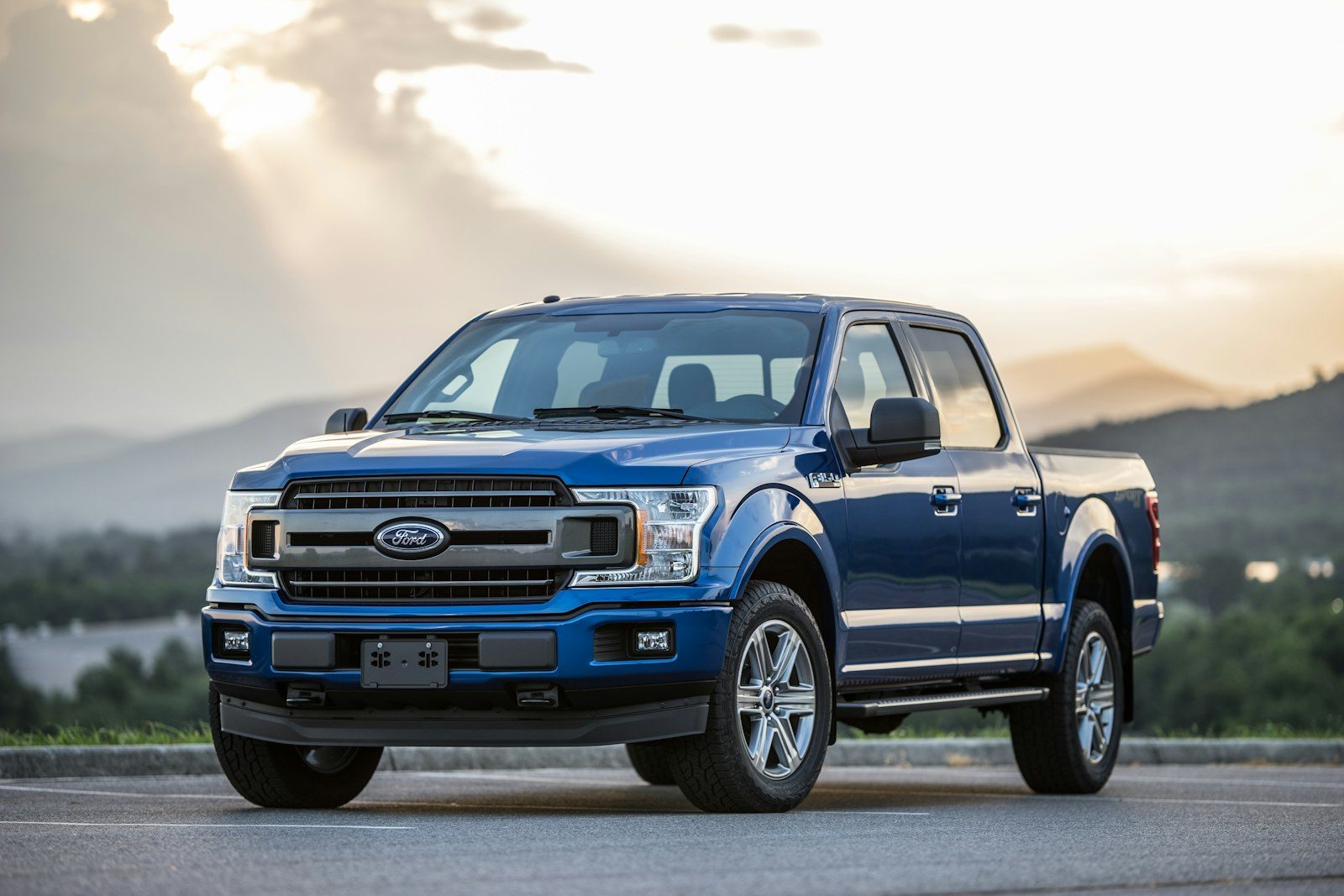
Pickup
F-150 · Silverado 1500 · RAM 1500 · Tundra · Tacoma · Ranger
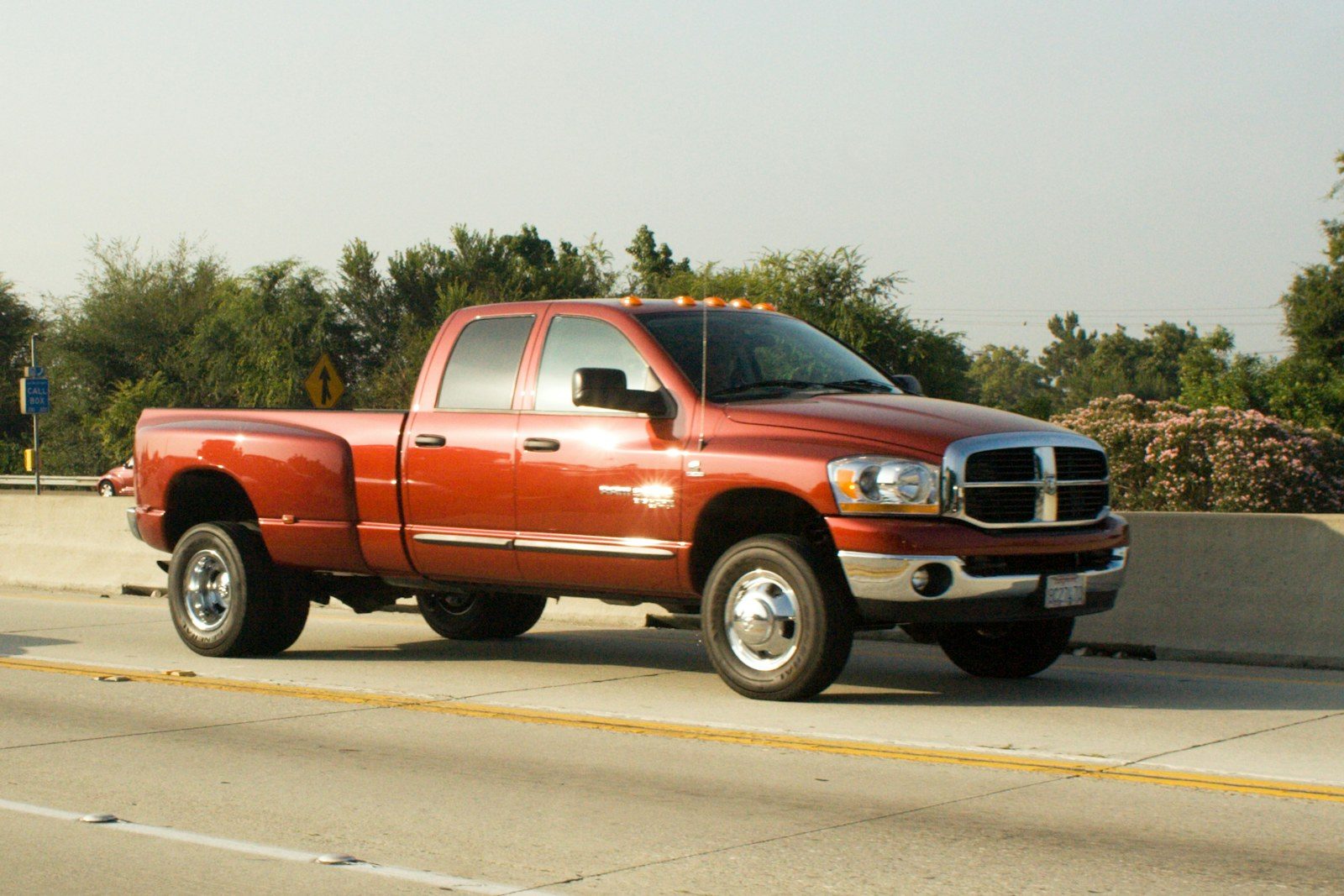
F-250 / HD
F-250+ · RAM 2500/3500 · Silverado HD · Super Duty work trucks
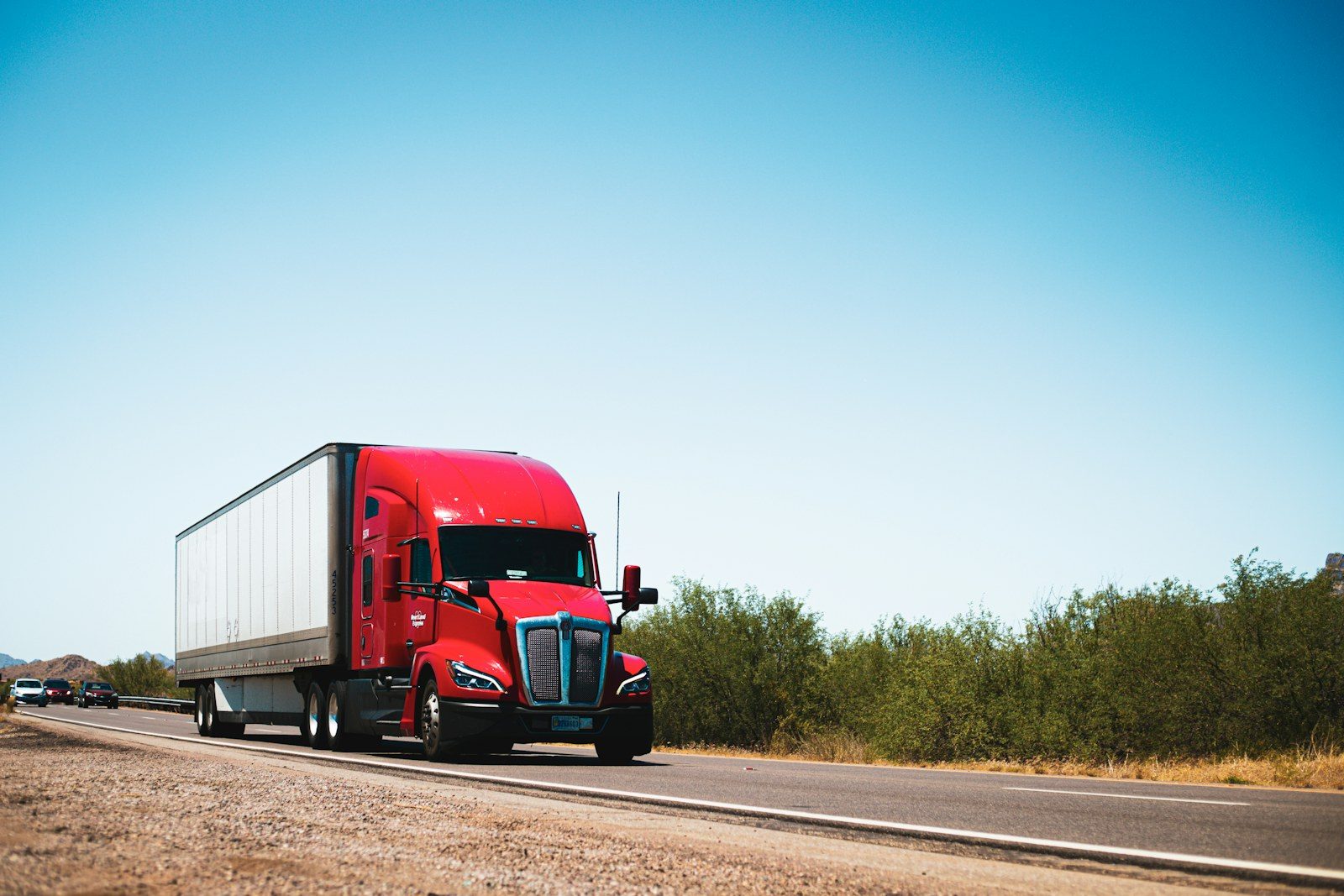
Semi / Class 8
Peterbilt · Kenworth · Freightliner · sleeper-cab installs
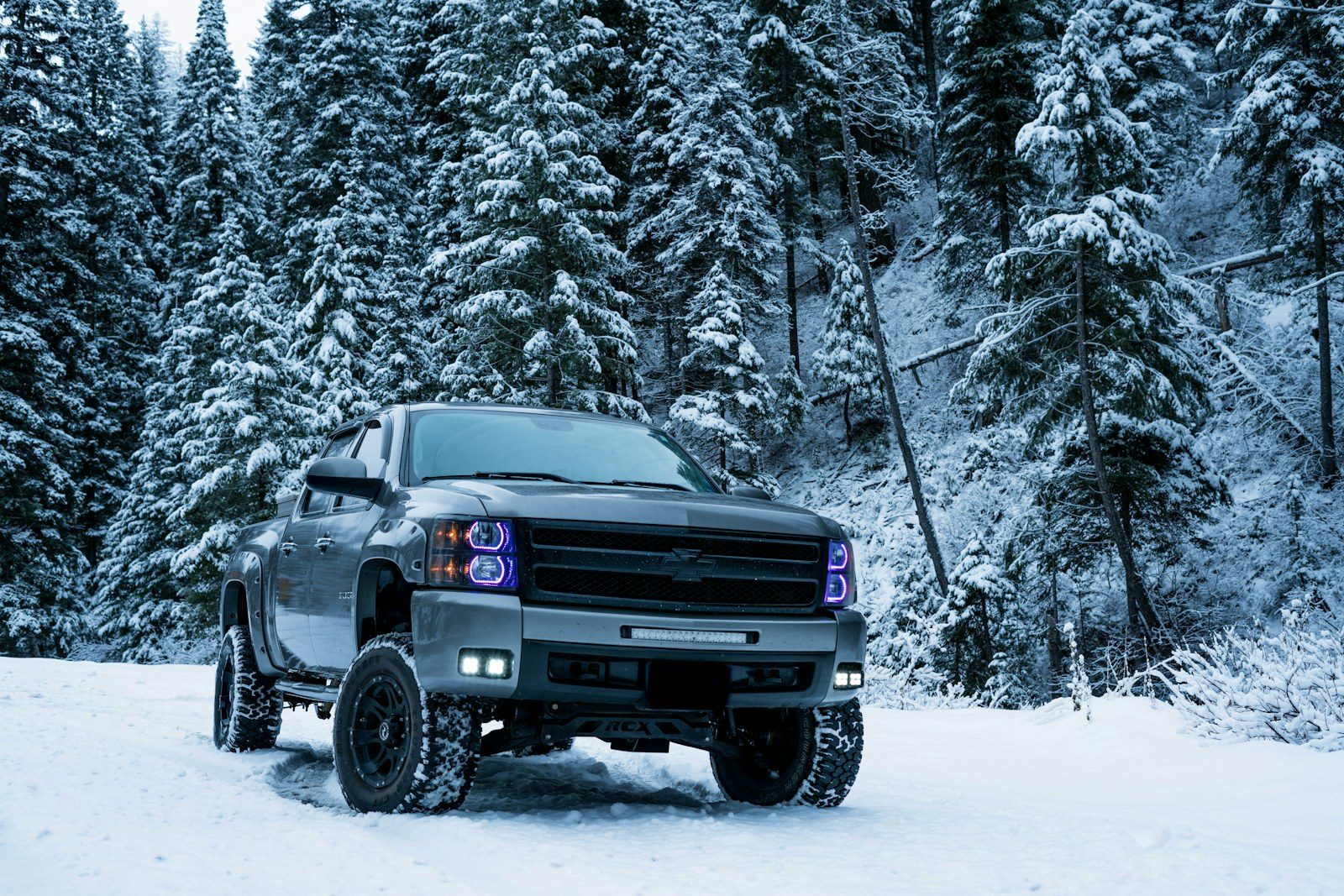
Chevy
Silverado · Tahoe · Suburban · GMC twins · Z71 / Trail Boss
BEST TRAIN HORN
FOR TRUCK.
Editorial best train horn for truck picks across the four type-buckets. Full comparison and 8 more cluster pages — see the dedicated best train horn for truck guide.
- 01
BossHorn M18 Pro
Cordless tankless Premium · ~$199Battery-powered horn that runs off Milwaukee M18, DeWalt 20V Max, or Ryobi 18V packs. No tank, no compressor, no wiring beyond a switch — and 152 dB measured. Best in class for trucks where bed space is at a premium.
152dBRead more → - 02
HornBlasters Shocker XL
Full air system · 4 trumpets Premium · ~$6504-trumpet flagship with a 1.5 gal tank and Viair 380C compressor in a single integrated kit. Aluminum trumpets, dual-tone chord, complete wiring harness. The standard-bearer of aftermarket train horns.
154dBRead more → - 03
Vixen VXH1503
Compact air system Mid · ~$290Sweet spot for budget-conscious truck builds. 1.5 gal tank, 150 PSI rating, 12V compressor. Three trumpets give you most of the chord weight at less than half the Shocker XL price.
150dBRead more → - 04
Stebel Magnum
Electric standalone Budget · ~$70Drop-in 12V electric — no tank, no compressor, just a 4 A draw. 139 dB is louder than any factory truck horn (around 110 dB) and fits behind most bumpers. The best low-effort upgrade for a daily driver.
139dBRead more → - 05
Carfka 4-Trumpet Kit
Budget air kit Budget · ~$130Entry-level full-air kit — 4 trumpets, 12V compressor, 1.5 gal tank. Build quality is what you would expect at this price. Useful for show trucks and casual installs; do not expect HornBlasters durability.
148dBRead more →
HOW MUCH DOES
A TRAIN HORN FOR TRUCK COST?
Four train horn for truck price tiers, what they get you, and the hidden costs nobody puts on the box.
Basic 4-trumpet electric or compact air kit. China-import quality. Loud at first; longevity unproven.
Vixen, mid-tier HornBlasters, Carfka premium. Real Viair compressor, durable tank, 1.5–3 gal.
HornBlasters Shocker XL, integrated systems, 4-trumpet quality kits. Lifetime install.
Nathan K5LA, Kahlenberg restored. Locomotive-spec replicas. Show-truck and collector-grade.
Hidden costs nobody mentions: shop install runs $150–400 if you do not DIY (most shops will not touch it because of the noise-ordinance liability — independent automotive customizers are your friend). Add $40–80 for an upgraded fuse and relay if your truck is older. Dual-battery upgrades start at $250 if you plan to honk extensively engine-off. Air-line PTC fittings, brackets, and weatherproofing add another $30–60 in small-parts cost on most builds.
For a fully detailed cost breakdown including labor, see the guide on horn cost by tier.
HOW TO INSTALL
A TRAIN HORN FOR TRUCK.
The 60-second answer for installing a train horn for truck. Full step-by-step at /guides/.
Tools required: drill with 1/4-inch and 3/8-inch bits, ratcheting wrench set, wire crimper, butt connectors, electrical tape, multimeter for voltage-drop check, and a torque wrench for compressor mount bolts. For full air systems add an open-end wrench set for plumbing fittings and Teflon tape for thread-seal.
Time required scales with kit complexity:
- Electric standalone: 60–90 minutes including bumper removal and re-mount.
- Tankless air: 2–3 hours — adds wiring for the compressor and a switch run to the cab.
- Full air system, 1.5 gal tank: 4–6 hours.
- Full air system, 5 gal tank with frame fab: 6–10 hours, often spread over a weekend.
- Class 8 semi factory-air tap: 1–2 hours; the air system is already there.
Wire it correctly. The most common kill-the-compressor mistake is undersized wiring. A Viair 444C peaks at 46 A; running 14 AWG to feed it is asking for a fire and a melted relay. Use the wire gauge calculator with your run length to size the cable. Fuse the compressor circuit with a 50 A inline fuse within 18 inches of the battery; never tap the cigarette-lighter circuit.
Mount the trumpets so they drain. Trumpet bells facing up will fill with water on the first rain and corrode the diaphragm in a season. Point them down or angled. Behind-grille and under-bed installs are forgiving; roof-rack and bed-mount setups need explicit drainage.
Common install mistakes we see in reader photos:
- Compressor mounted facing intake-side down into road grime — the air filter clogs in months and the compressor fails. Filter should face up or rear, away from the airstream.
- Solenoid valve mounted upside-down — the gravity-feed return spring works against you, and the valve sticks open occasionally. Mount with the coil up.
- Pressure switch wired in series with the horn switch — the compressor only runs when you press the horn button. Result: empty tank every time. The pressure switch should run directly off ignition power and cycle the compressor independently.
- Air-line zip-tied to the exhaust pipe. Not joking — we've seen it. PTC fittings melt at 200°F. Route lines along the frame rail away from heat sources.
- Skipping the relay and running 30+ A through a dash switch. The switch melts. Always use a 40 A or 60 A automotive relay between the dash button and the compressor.
SEVEN
CALCULATORS.
Tank runtime. Compressor recovery. Wire gauge. Battery drain. Decibel distance. PSI vs. loudness. Cordless pack runtime. All sized for truck loads.
Tank runtime
Recovery time
Wire gauge
Battery drain
dB at distance
PSI vs loudness
Open all
seven tools →
ARE TRAIN HORNS
LEGAL ON TRUCKS?
Federal silence, state-by-state restrictions, and the "off-road only" loophole.
Federal: there is no federal law banning train horns on personal vehicles. FMVSS-571.108 sets the minimum specs for OEM horns; aftermarket horns are not regulated at the federal level. The Department of Transportation does not have a maximum decibel for personal vehicle horns.
State law is where compliance lives. Most states fall into one of three patterns:
- "Warning purposes only": the horn must be used to alert another driver of immediate hazard. Honking at a stoplight or in a parade context is the violation, not the install. Most US states.
- "Unreasonably loud or harsh" clause: universal across the nine state vehicle codes we verified — no numeric decibel cap, but a 140+ dB horn used in a non-emergency context is a textbook violation at officer discretion.
- Equipment-type approval: Pennsylvania §4535(a) requires the horn to be "of a type approved in regulations of the department" (PennDOT) — closest among verified states to a non-OEM-horn ban.
Almost every aftermarket train horn kit ships with "off-road use only" labeling. This is the manufacturer's disclaimer — once the kit is installed and used on a public road, the responsibility is on the owner, not the seller. The label does not legalize an otherwise-illegal install; it shifts liability.
Practical guidance: install in a state-by-state compliant configuration, use the horn as a horn (warning of hazard), and accept that police discretion exists. For specific state vehicle codes and citations, see the legal guide.
State examples worth knowing before you buy:
- California Vehicle Code §27000: horn must be "audible under normal conditions from a distance of not less than 200 feet, but no horn shall emit an unreasonably loud or harsh sound." No numeric decibel cap in the horn statute itself.
- Texas Transportation Code §547.501: horn must emit sound audible at 200 feet, "may not emit an unreasonably loud or harsh sound or a whistle." No upper decibel cap.
- New York VAT §375(1): horn shall not be "unnecessarily loud or harsh." Used at officer discretion; train horns get cited under this clause regularly in NYC.
- Florida §316.271: 200-foot audibility, no "unreasonably loud or harsh sound or a whistle." A violation is a noncriminal civil infraction.
- Pennsylvania 75 Pa.C.S. §4535(a): horn must be "of a type approved in regulations of the department" (PennDOT). Combined with the 67 Pa. Code §175.80(b)(3) inspection rule that fails vehicles with "harsh or unreasonably loud" horns, PA is the strictest of the nine states we surveyed.
- Ohio Revised Code §4513.21: prohibits "any siren, whistle, or bell" on a vehicle. Penalty is a minor misdemeanor.
WHERE TO BUY
A TRAIN HORN FOR TRUCK.
Buying a train horn for truck install — direct-from-brand vs marketplaces vs the AliExpress trap. What we recommend, what we avoid.
- Direct from manufacturer (HornBlasters, BossHorn, Carfka, Vixen): best for warranty, kit completeness, and confirming you actually got what's on the box. Slightly more expensive than marketplaces but counterfeit risk is zero.
- Amazon: convenient but the counterfeit-pack risk on aftermarket kits is real — third-party sellers source from various supply chains and what arrives is sometimes not what the listing showed. Stick to "ships from and sold by Amazon" or first-party brand pages.
- eBay: good for used kits, parts-out scenarios, and discontinued models. Verify pictures of the actual unit being shipped, not stock photos. Returns are spotty.
- Specialty automotive retailers (4WheelParts, Summit Racing): smaller selection but staff who actually know the products. Often where you find F-250 / Super Duty fitment kits not stocked elsewhere.
- Avoid: anonymous Aliexpress and Wish listings claiming 200+ dB at $40. The decibel rating is fabricated, the components inside the housing rarely match the label, and warranty does not exist.
See /buy/ for retailer-specific guides — Amazon, eBay, Canada cross-border, deal-watch.
Counterfeit detection: the aftermarket train horn space has a noticeable counterfeit problem, particularly in budget kits. Three quick checks before you trust the dB rating on the box:
- Weight: a real 4-trumpet aluminum horn weighs 8–12 lb. A counterfeit with painted plastic trumpets and a cheaper diaphragm weighs 4–6 lb. If the box feels light, the kit is light on materials too.
- Compressor branding: Viair, ARB, and Air Zenith are the legitimate compressor manufacturers in this space. A "150 PSI heavy-duty compressor" with no brand stamp on the housing is a no-name unit, often relabelled. Ask for the model number before you buy.
- Decibel rating without test conditions: "200 dB!" with no SAE J1470 reference distance, weighting, or test method is fabricated. Real horns publish a number plus "at 10 ft, A-weighted" or similar. The physical maximum any practical air horn produces is around 175 dB; anything claimed above that is marketing.
EVERY HORN WORTH MOUNTING.
FREQUENTLY ASKED.
Twelve questions pulled from People Also Ask, Reddit threads, and reader emails.
- 01 How loud is a train horn for a truck?
- Aftermarket train horns for trucks typically measure 130–175 dB at 10 feet (the SAE J1470 reference distance, A-weighted). The factory horn on a stock pickup is around 105–115 dB by comparison. Real-locomotive K5LA chord horns hit 175 dB at the locomotive itself, but most aftermarket replicas land in the 145–155 dB range when measured under SAE conditions.
- 02 Are train horns legal on a truck?
- There is no federal law banning train horns on personal vehicles. FMVSS-571.108 governs OEM horns; aftermarket horns sit outside that scope. State law is where it gets tricky — most states cap horn use to "warning of immediate hazard" and prohibit decibels above a state-defined threshold (often 95 dB at 50 feet). Misuse — honking at a stoplight, on a parade route — is the violation, not the install. Most aftermarket kits ship with "off-road only" labeling for this reason.
- 03 How much does a train horn for a truck cost?
- Budget kits start around $80–150 (4-trumpet electric or compact air). Mid-tier full-air systems with a proper compressor and 1.5–3 gallon tank run $200–400. Premium kits like the HornBlasters Shocker XL are $500–800. Locomotive-spec replicas (Nathan K5LA, Kahlenberg) start around $1,000 and go to $2,000+ for restored authentic units. Add $150–400 for shop install if you do not DIY.
- 04 Can I install a train horn on my pickup myself?
- Yes — for an electric standalone horn or a compact tankless kit, the install is 2–4 hours with basic tools (drill, wrenches, wire crimper, electrical tape). Full-air systems with a 5-gallon tank and dedicated compressor jump to 4–8 hours and require frame-mount fabrication, fuse-box wiring, and air-line plumbing. The wire gauge and battery drain calculators on this site help size the electrical side correctly.
- 05 Will a train horn drain my truck battery?
- Only if the engine is off. With the engine running, the alternator typically covers the 25–46 A peak draw of a typical compressor — assuming the alternator is healthy and the truck is at idle or above. Engine-off use (parade stops, tailgating, idling at a show) is the scenario where battery drain matters; a 60 Ah AGM at 30 A average draw runs roughly 80 minutes before hitting the 80% depth-of-discharge limit.
- 06 How big a tank do I need for a train horn?
- For occasional honks (parade, alert), a 1.5–2 gallon tank at 150 PSI is plenty — 8–12 short blasts before the compressor needs to recharge. For sustained honking (show truck, trolling) or chord-style horns that pull a lot of air, step up to 3–5 gallons. Class 8 semis already have a 4–5 gallon wet tank you can tap; no additional storage needed.
- 07 Will a train horn fit on a Ford F-150?
- Yes — the F-150 is one of the most accommodating chassis for a train horn install. Frame-rail mount points are accessible from underneath, the aux fuse panel on Lariat and Platinum trims gives a clean tap point, and the 130 A factory alternator covers most aftermarket compressors. See the F-150 install playbook for generation-specific notes (2009–2014, 2015–2020, 2021+).
- 08 What's the difference between a train horn and an air horn?
- A train horn produces a multi-trumpet chord — typically 3 to 5 trumpets tuned to specific notes that combine into the locomotive K5LA-style chord. An air horn is the broader category that includes single-trumpet and dual-trumpet horns. All train horns are air horns; not all air horns are train horns. Chord weight, not raw decibel count, is what makes a train horn sound like a train.
- 09 Can you fit a train horn on a semi truck?
- Yes — and easily. A Class 8 semi already runs a 120+ PSI air system for the brakes; adding a train horn is a tap into the wet tank rather than a build from scratch. You skip the compressor, skip the standalone tank, and just run an air line and solenoid. Sleeper-cab routing is the main consideration; roof-mount or hood-mount are the typical positions.
- 10 Are train horns waterproof?
- Most aftermarket train horns are not fully waterproof. The trumpet housings are weather-resistant but the diaphragms can corrode if water sits in them, and the solenoid valves typically have IP54 ratings — splash-proof, not submersion-proof. For under-bed or behind-bumper installs, add a downward-facing trumpet orientation, drain holes, and a rain shield. Roof-mount installs need full IP65+ housings, which is uncommon outside marine-grade kits.
- 11 How long does a horn blast last on a tank?
- Depends on tank volume, pressure, and horn air consumption. A 3-gallon tank between 150 and 120 PSI (the typical compressor cycle) holds about 6 gallons of usable atmospheric-pressure air. At a typical 6 CFM horn draw, that is roughly 60 seconds of continuous honk — or 30 two-second blasts. Use the air tank runtime calculator for your specific kit and pressure range.
- 12 Will a train horn pass a state safety inspection?
- Pennsylvania explicitly fails vehicles with "harsh or unreasonably loud" horns at periodic inspection (67 Pa. Code §175.80(b)(3)). New York's CR-79 inspection regulations track VAT §375(1)'s "unnecessarily loud or harsh" language. States without mandatory periodic inspection (FL, AZ, MS, AL, SC, WA, and others) skip this entirely — only roadside citation risk applies. See the legality guide for the verified state-by-state breakdown.
MOST READ TRAIN HORN FOR TRUCK GUIDES.
EVERYTHING ON THIS SITE.
READY TO PICK?
START WITH THE TRUCK.
Eight buyer-guide hubs at /best/, thirteen type pages at /types/, six vehicle playbooks at /vehicle/. Brand-by-brand reviews at /brands/, install + cost + legal at /guides/, retailer guidance at /buy/, long-form journals at /blog/. If you want a train horn for truck install — pickup, semi, or HD — and your specific truck-and-horn pairing is not covered yet, tell us.